
Overview
Why mortar matters
Mortar is designed to be the sacrificial part of a masonry chimney. As it erodes, gaps open that let water into the wall. In winter, that water freezes and expands, loosening brick and speeding up the damage.
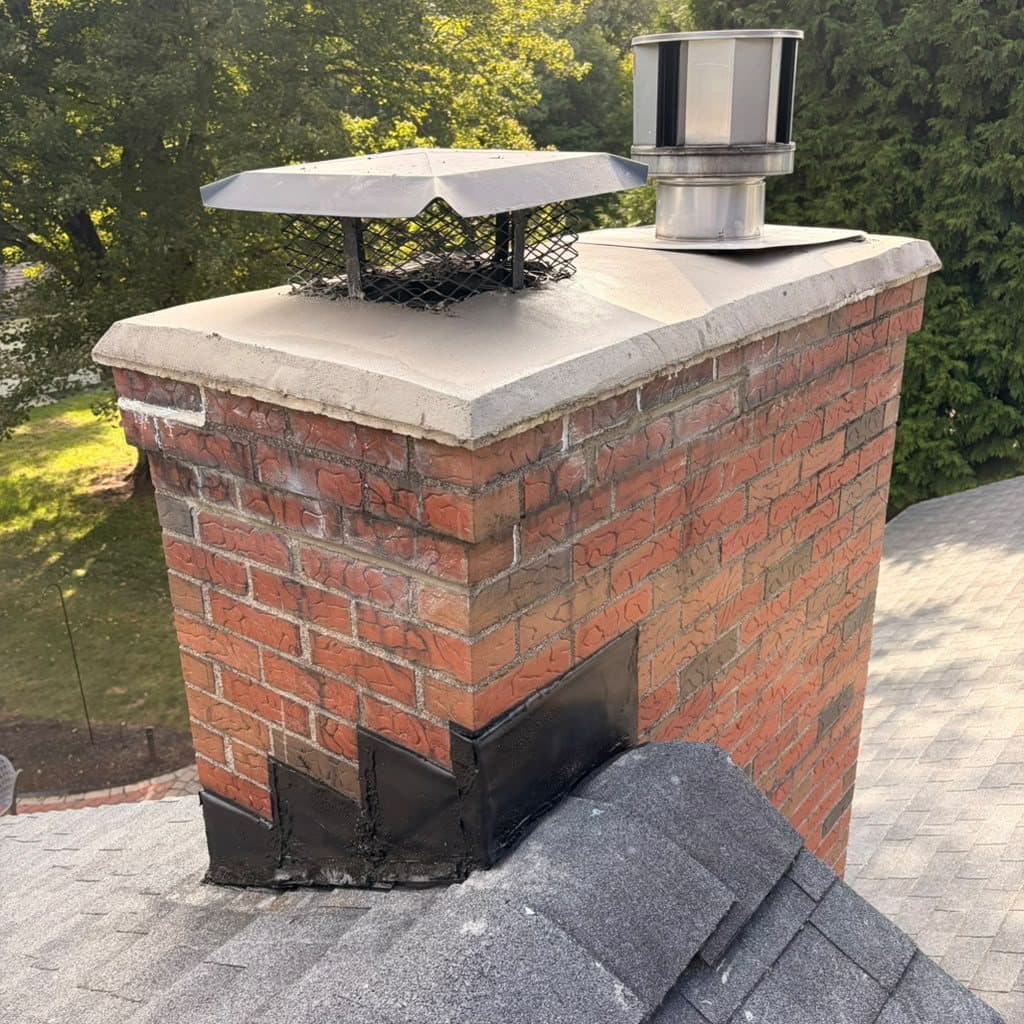
Tuckpointing involves grinding out deteriorated mortar to a consistent depth and repacking the joints with new mortar. Where bricks are cracked or spalled, we replace them to match as closely as practical.
Signs you need masonry repair
- Mortar that is recessed, sandy, or crumbling
- Cracked, flaking, or spalling bricks
- Loose bricks near the top of the chimney
- White staining (efflorescence) on the brick
- A chimney that appears to lean
Our masonry work
- 01
Assess
We determine how deep the damage goes and whether tuckpointing or rebuilding is the right fix.
- 02
Remove old mortar
We cut out deteriorated joints to a consistent depth.
- 03
Repoint & replace
We pack new mortar, replace damaged brick, and tool the joints neatly.
Tuckpointing & Masonry Repair FAQ
What is the difference between tuckpointing and repointing?
The terms are often used interchangeably. Both describe removing old mortar and replacing it with new mortar in the joints.
When is a rebuild better than tuckpointing?
If bricks are loose, the chimney is leaning, or the damage runs deep, rebuilding the affected section is usually the safer and longer-lasting option.