
Overview
Repairs that protect your home
Most chimney damage comes back to one thing: water. Rain and melting snow work their way into cracked crowns, worn mortar joints, and gaps in flashing. Once inside, New Jersey's freeze-and-thaw cycles expand those cracks further each winter.
We handle the full range of chimney repairs, from small fixes like resealing a crown or replacing a cap to larger work like rebuilding flashing, tuckpointing, relining, or rebuilding the top of the chimney.
Before any work starts, we explain what we found, why it matters, and what we recommend, so you can make an informed decision.
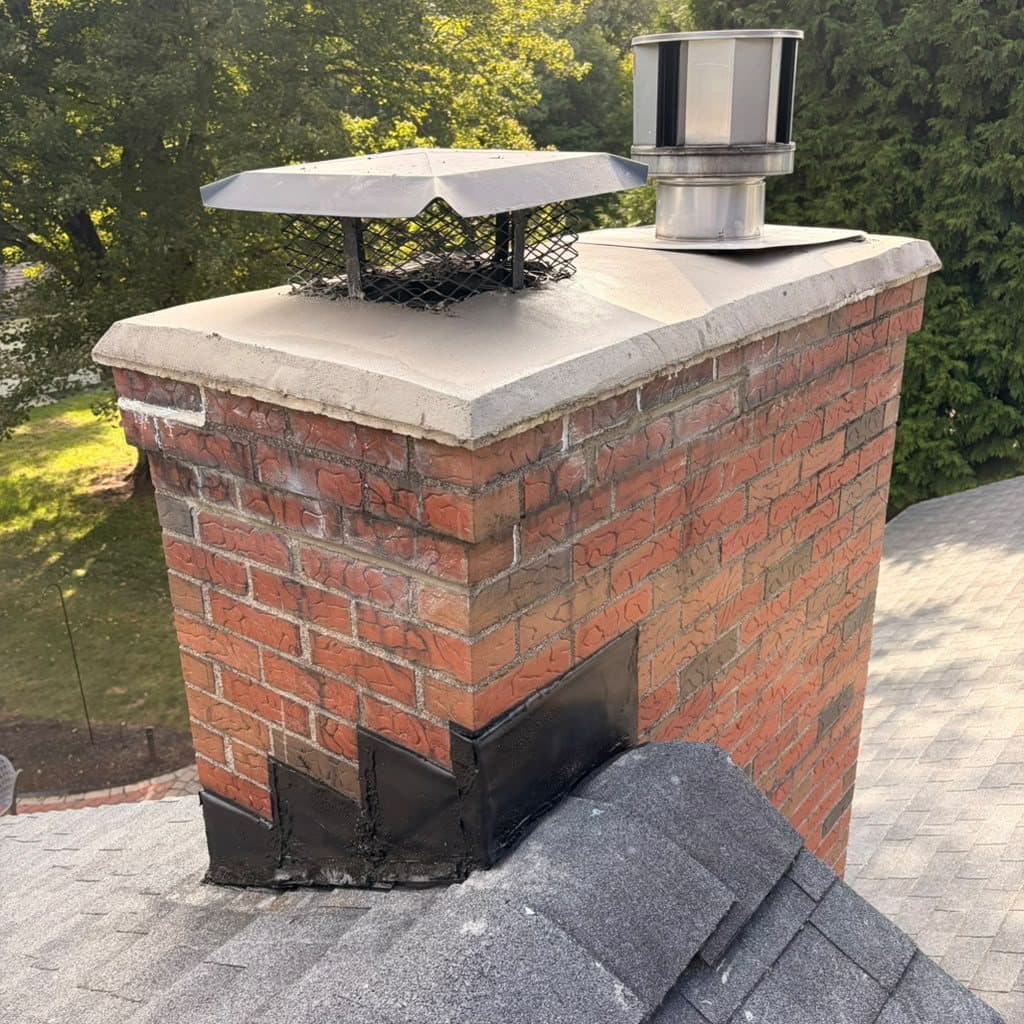
Signs your chimney needs repair
- Water stains on ceilings or walls near the chimney
- Crumbling mortar, loose bricks, or brick pieces on the roof or ground
- White staining (efflorescence) on the brick
- Cracks in the crown or a missing or rusted cap
- Rust on the damper or firebox
- Cracked or missing firebrick inside the fireplace
Common chimney repairs we handle
- 01
Crown & cap
Repairing or rebuilding cracked crowns and installing new caps to keep water and animals out.
- 02
Flashing
Resealing or replacing flashing where the chimney meets the roof.
- 03
Masonry
Tuckpointing, brick replacement, and partial or full rebuilds.
- 04
Flue & firebox
Liner repairs and relining, smoke chamber parging, and firebox repairs.
Chimney Repair FAQ
Can a leaking chimney be fixed without rebuilding it?
Often, yes. Many leaks come from the crown, cap, or flashing and can be repaired without major masonry work. An inspection helps pinpoint the source.
Is it safe to use my fireplace with a damaged chimney?
It depends on the damage. Cracked flue liners, heavy creosote, or a damaged firebox can make fires unsafe. If you suspect a problem, have it inspected before your next fire.