
Overview
Why the crown matters
A crown takes the full force of rain, snow, and sun. Many crowns are built too flat or from the wrong mix, and small cracks open wider with every freeze-and-thaw cycle.
Catching crown damage early usually means a straightforward repair: cleaning and sealing hairline cracks with a flexible crown sealant. When a crown is badly cracked, crumbling, or poorly built, the better long-term answer is to remove it and form a new one with proper slope and overhang.
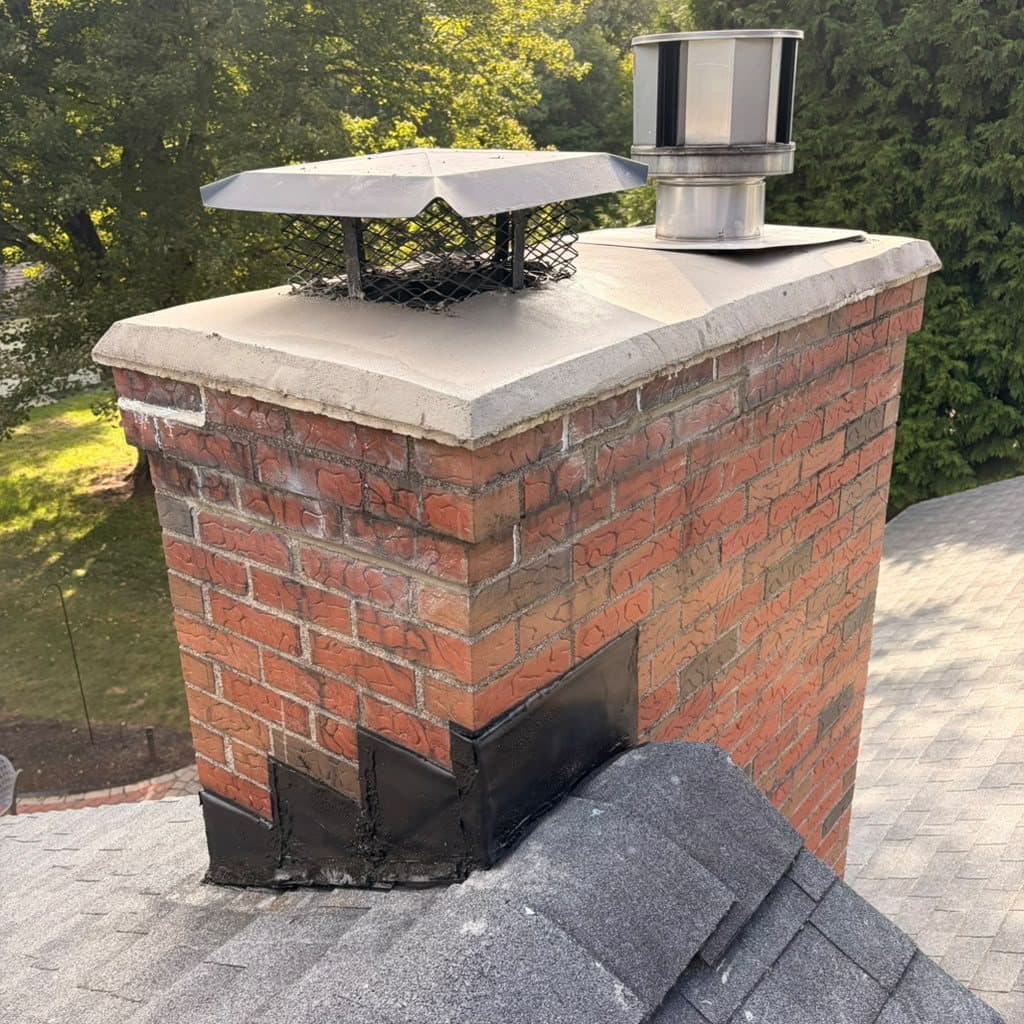
Signs of crown damage
- Visible cracks or chips on the top of the chimney
- Pieces of concrete on the roof
- Water in the firebox or stains near the chimney
- Spalling or flaking brick near the top of the chimney
Repair or rebuild
- 01
Crown sealing
For minor cracks, we clean and apply a flexible crown sealant.
- 02
Crown rebuild
For failing crowns, we remove the old crown and form a new one with proper slope and drip edge.
- 03
Finish the top
We check the cap and flue top so the whole assembly sheds water.
Chimney Crown Repair & Installation FAQ
Can a cracked crown cause leaks inside my house?
Yes. Water that gets through a cracked crown can travel through the masonry and show up as stains on ceilings, walls, or inside the fireplace.
How do I know if the crown needs repair or replacement?
Small hairline cracks can often be sealed. Wide cracks, crumbling material, or a crown with no slope usually need replacement. We will show you what we see and explain the options.