
Overview
Why flashing fails
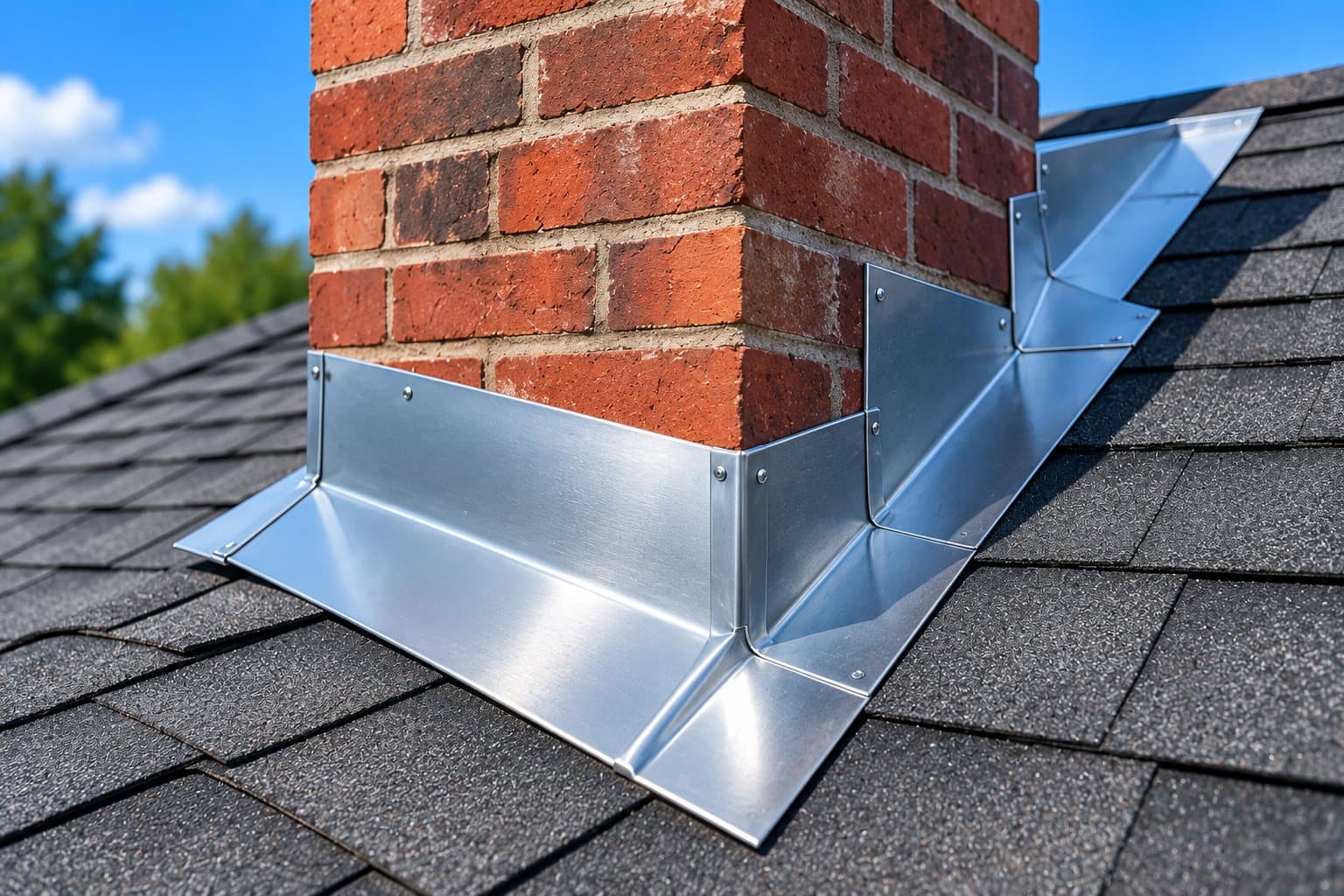
The joint between a chimney and a roof moves as materials expand and contract. Over time sealant dries out, nails loosen, and step flashing can separate from the brick. Roofing work can also disturb flashing that was fine before.
Some flashing problems can be resealed. Others need the counter-flashing cut into the mortar joints and replaced so it sheds water the way it should. We check the whole assembly, not just the obvious gap.
Signs of a flashing problem
- Ceiling or wall stains near the chimney
- Water in the attic around the chimney
- Lifted, rusted, or loose metal at the roofline
- Heavy tar patches around the base of the chimney
How we fix flashing
- 01
Find the leak
We look at the flashing, crown, and masonry to confirm where the water is getting in.
- 02
Reseal or replace
We reseal sound flashing or install new step and counter-flashing when needed.
- 03
Check the rest
We make sure the crown and cap are not contributing to the problem.
Chimney Flashing Repair FAQ
Is a chimney leak a roofing problem or a chimney problem?
It can be either. Leaks near a chimney often come from flashing, but crowns, caps, and porous brick can also let water in. Finding the true source is the first step.