
Overview
What a chimney liner does
Many older chimneys in the area were built with clay tile liners. Over decades, heat, moisture, and settling can crack those tiles or open the joints between them. Damaged liners can let heat reach nearby framing and allow gases to seep into the house.
A liner also needs to be the right size for the appliance it serves. When a homeowner switches to a wood stove, insert, or new furnace, the existing flue is often too large or the wrong material, which can lead to poor draft and faster buildup.
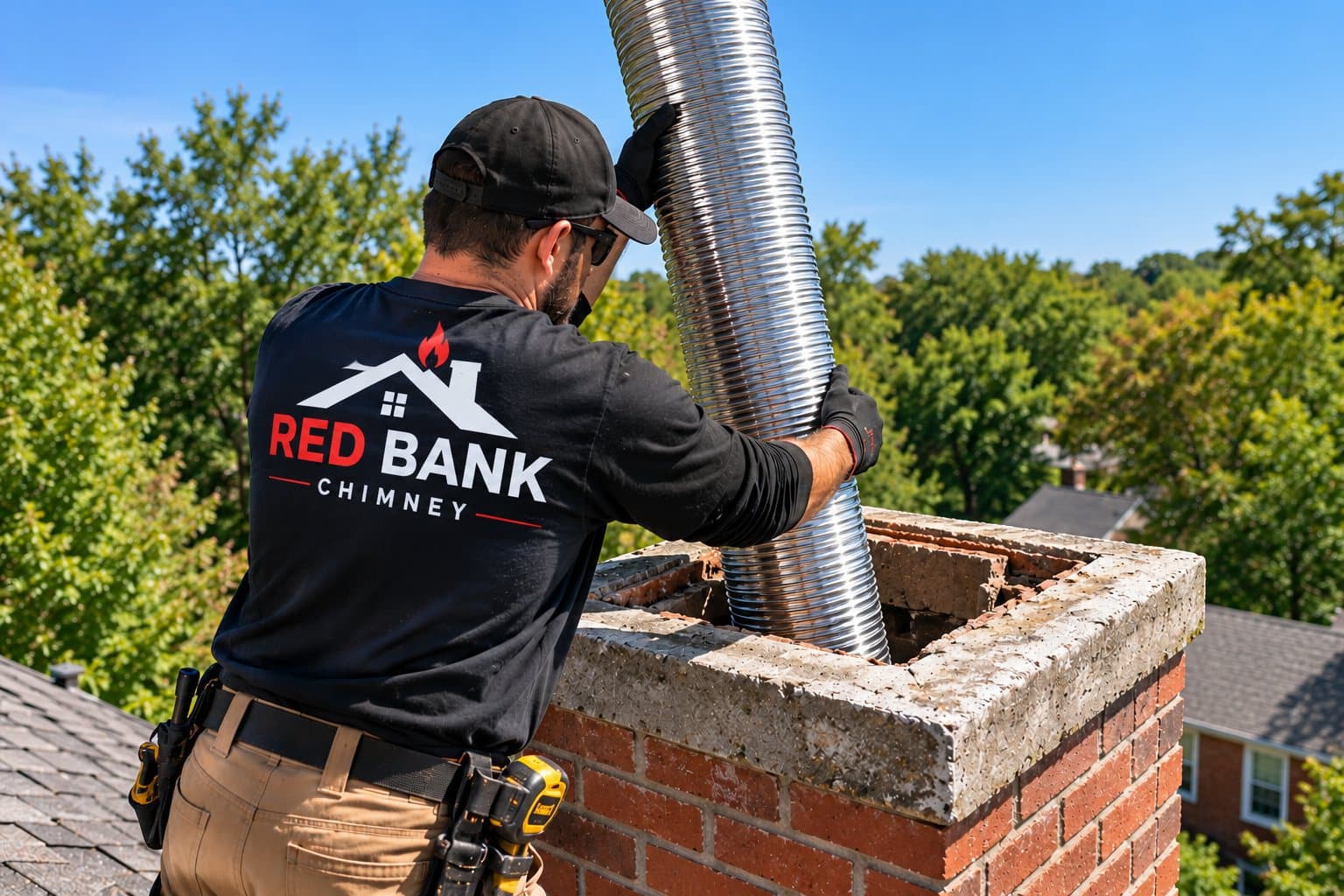
We install stainless steel liners sized to your appliance and your chimney, along with the connections and top plate needed to finish the job cleanly.
When relining may be needed
- An inspection found cracked, missing, or shifted flue tiles
- You are installing a wood stove, fireplace insert, or new heating appliance
- Your chimney had a chimney fire
- Pieces of tile are falling into the firebox or cleanout
- Persistent draft problems or condensation inside the chimney
Our relining process
- 01
Evaluate the flue
We inspect the existing liner and confirm what the appliance needs.
- 02
Size the liner
We match liner diameter and type to the appliance and chimney.
- 03
Install & connect
We lower the liner through the chimney and make the connections at both ends.
- 04
Seal the top
We finish with a top plate and cap to keep water and animals out.
Chimney Liner Installation FAQ
Do I need a liner for my wood stove or insert?
In most cases, a properly sized liner is required for a wood stove or insert vented through a masonry chimney. It helps the appliance draft correctly and keeps heat and gases contained.
Can a cracked clay liner be repaired?
Minor damage can sometimes be repaired, but extensive cracking usually calls for a new liner. We explain the options after inspecting the flue.