
Overview
Why every chimney needs a cap
Rain that falls straight down an uncapped flue soaks the liner, the smoke chamber, and the damper, leading to rust, deterioration, and musty odors. Animals looking for shelter can build nests that block the flue entirely.
Caps also include a mesh screen that helps keep embers from escaping the top of the chimney. In coastal areas like ours, wind-driven rain and salt air make a durable cap especially important.
We install single-flue caps and multi-flue caps that cover the entire crown, sized to your chimney and fastened securely.
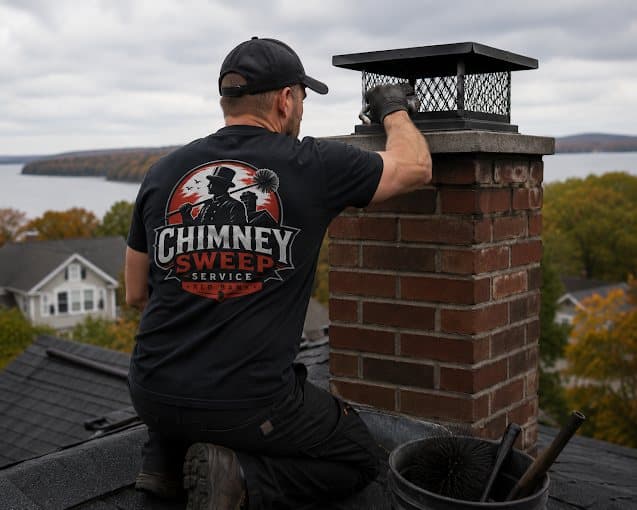
Signs you need a new cap
- There is no cap on your chimney
- The cap is rusted, bent, loose, or missing its screen
- You hear animals in the chimney
- Water drips into the firebox during rain
- Leaves or nesting material in the firebox
How we install a cap
- 01
Measure
We measure the flue or crown so the cap fits correctly.
- 02
Choose the right style
Single-flue or full-coverage, based on your chimney.
- 03
Secure it
We fasten the cap firmly so it stays put in storms.
Chimney Cap Installation FAQ
Will a chimney cap affect my draft?
A correctly sized cap should not hurt draft, and in some cases it helps reduce downdrafts caused by wind.
What is the difference between a cap and a chase cover?
A cap sits on top of a masonry flue or crown. A chase cover is a metal panel that covers the top of a framed (siding-covered) chimney chase used with factory-built fireplaces.