
Overview
Why chimney cleaning matters
Creosote is a flammable byproduct of burning wood. It sticks to the inside of the flue and can build up faster than most homeowners expect, especially when wood is not fully seasoned or fires burn cool and smoky. Left alone, it narrows the flue, hurts draft, and becomes fuel for a chimney fire.
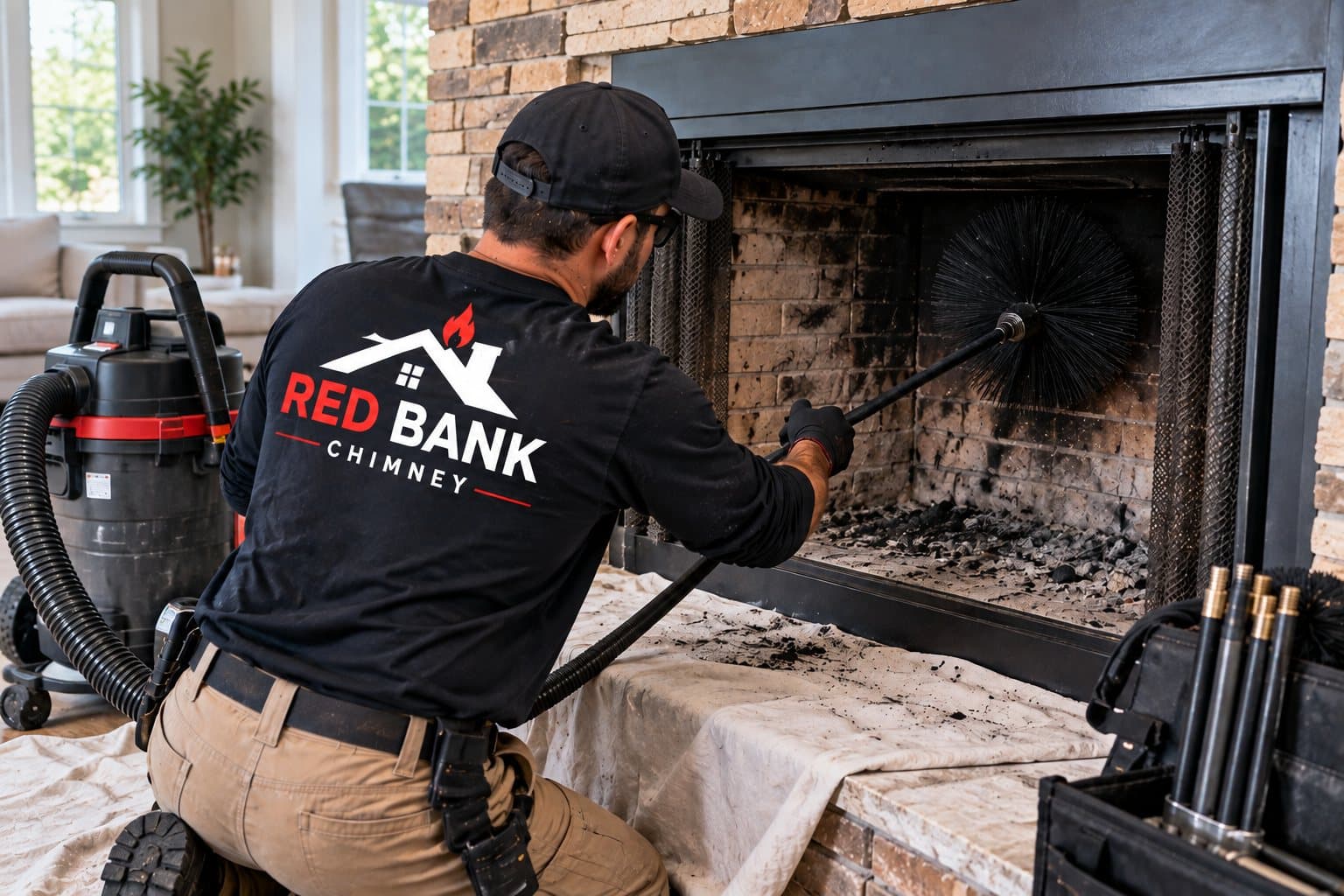
A professional sweep uses brushes sized to your flue and a vacuum system to capture soot and dust. We protect the area around your fireplace before we start and leave it tidy when we finish.
Cleaning is also a good moment to spot early problems — cracked tiles, a failing damper, or a damaged cap — before they turn into bigger repairs.
Signs your chimney needs a cleaning
- A strong, smoky or campfire smell, especially in humid weather
- Smoke drifting into the room instead of going up the flue
- Black, flaky or tar-like buildup visible inside the firebox or damper
- Fires that are hard to start or keep going
- Debris, nesting material, or soot falling into the firebox
- You burn fires regularly and it has been a season or more since the last sweep
How we clean your chimney
- 01
Protect your home
We set down drop cloths and seal off the fireplace opening to keep soot contained.
- 02
Sweep the flue
We brush the flue, smoke chamber, and damper area to remove creosote and soot.
- 03
Clean the firebox
We clear out the firebox and vacuum debris so nothing is left behind.
- 04
Report what we see
We let you know about any wear or damage we noticed while cleaning.
Chimney Cleaning & Sweeping FAQ
How often should a chimney be cleaned?
It depends on how much you burn and what you burn. NFPA 211 calls for cleaning when there is 1/8 inch of sooty buildup or any glazed creosote. For many households that burn regularly, that means at least once a year.
Will cleaning make a mess in my living room?
It shouldn't. We cover the work area and use a vacuum system to capture soot and dust during the sweep.
Do gas fireplaces need cleaning?
Gas burns cleaner than wood, but gas vents and chimneys can still collect debris, nests, and corrosion. They should be checked annually and cleaned when needed.