
Overview
How waterproofing protects your chimney
A chimney-specific water repellent penetrates the masonry and helps it shed liquid water while still allowing water vapor to escape. That breathability matters — ordinary sealers and paints can trap moisture inside the brick and make damage worse.
Waterproofing works best on sound masonry. We address cracks, failing mortar, and crown damage first, then apply the repellent so the whole chimney is protected.
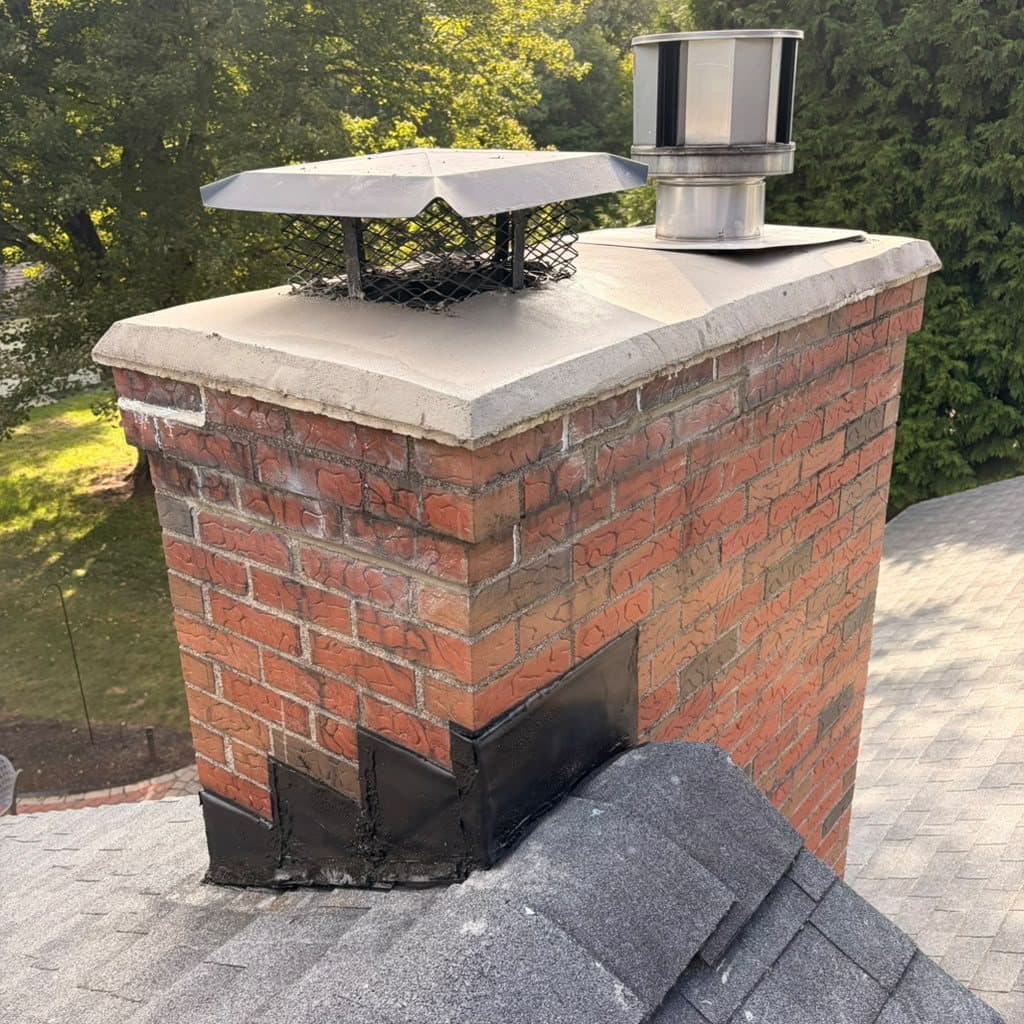
When waterproofing makes sense
- After tuckpointing or masonry repairs
- Brick that darkens and stays wet long after rain
- White efflorescence staining on the chimney
- Minor spalling or flaking on the brick face
Our process
- 01
Repair first
We fix cracks, joints, and the crown before applying any product.
- 02
Clean & prep
We prepare the surface so the repellent can penetrate.
- 03
Apply
We apply a breathable, masonry-specific water repellent.
Chimney Waterproofing FAQ
Can I just use a regular masonry sealer?
Not all sealers are right for chimneys. Products that form a film can trap moisture in the brick. Chimneys need a breathable, vapor-permeable repellent.